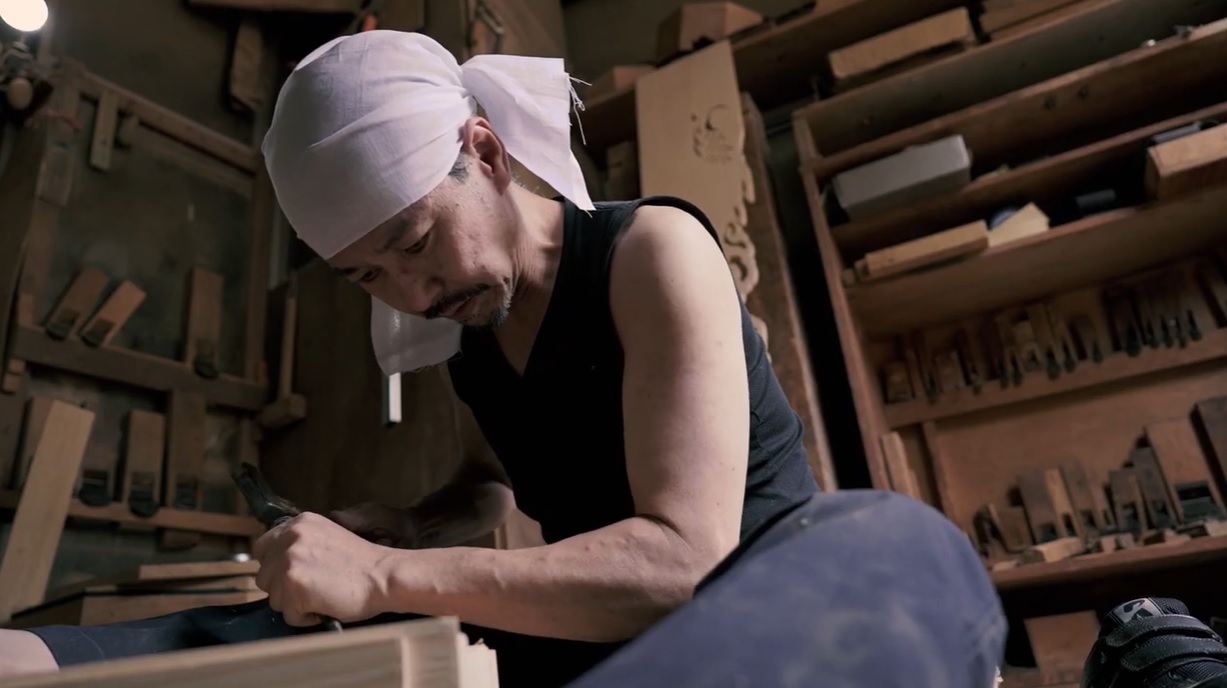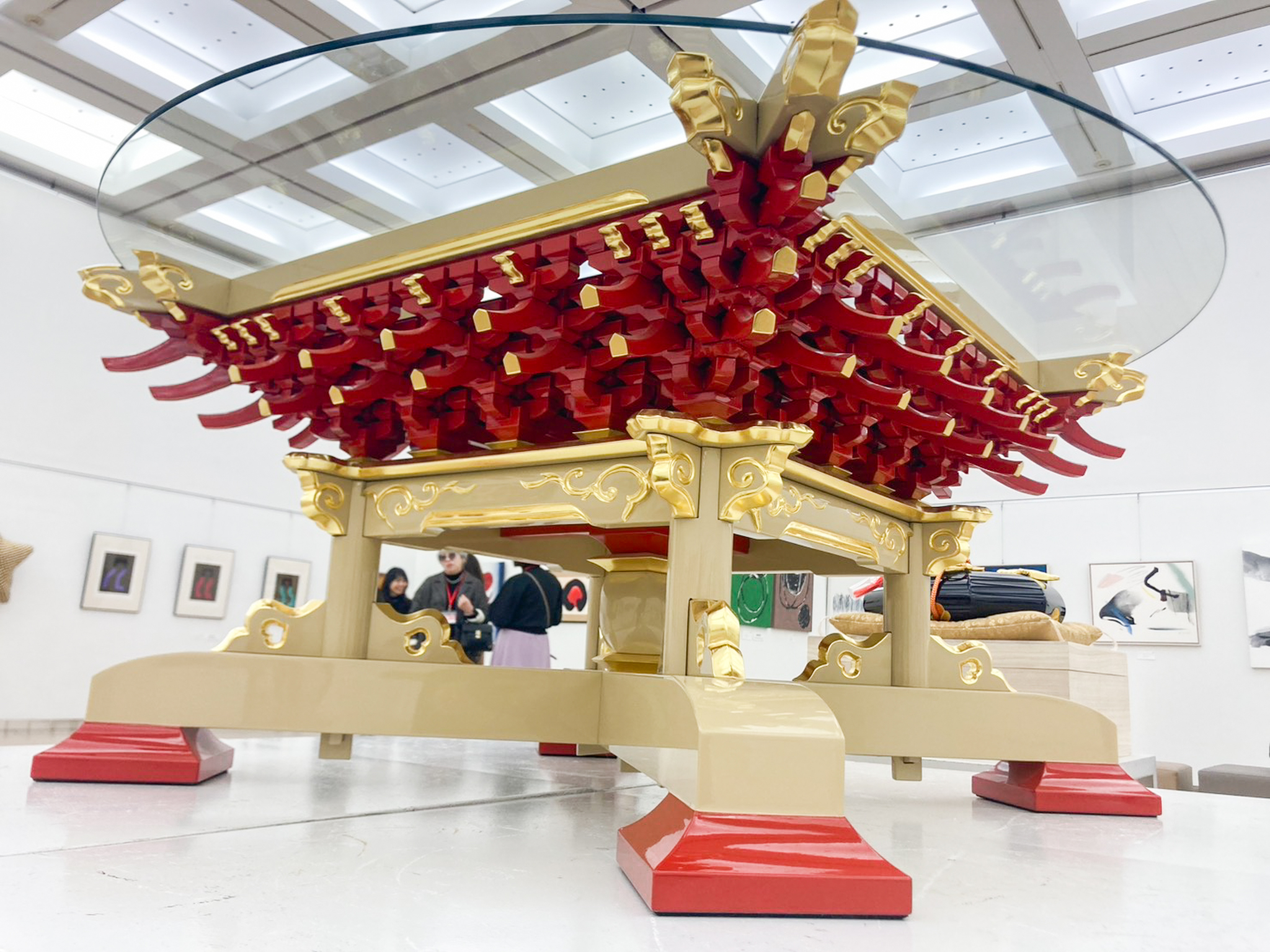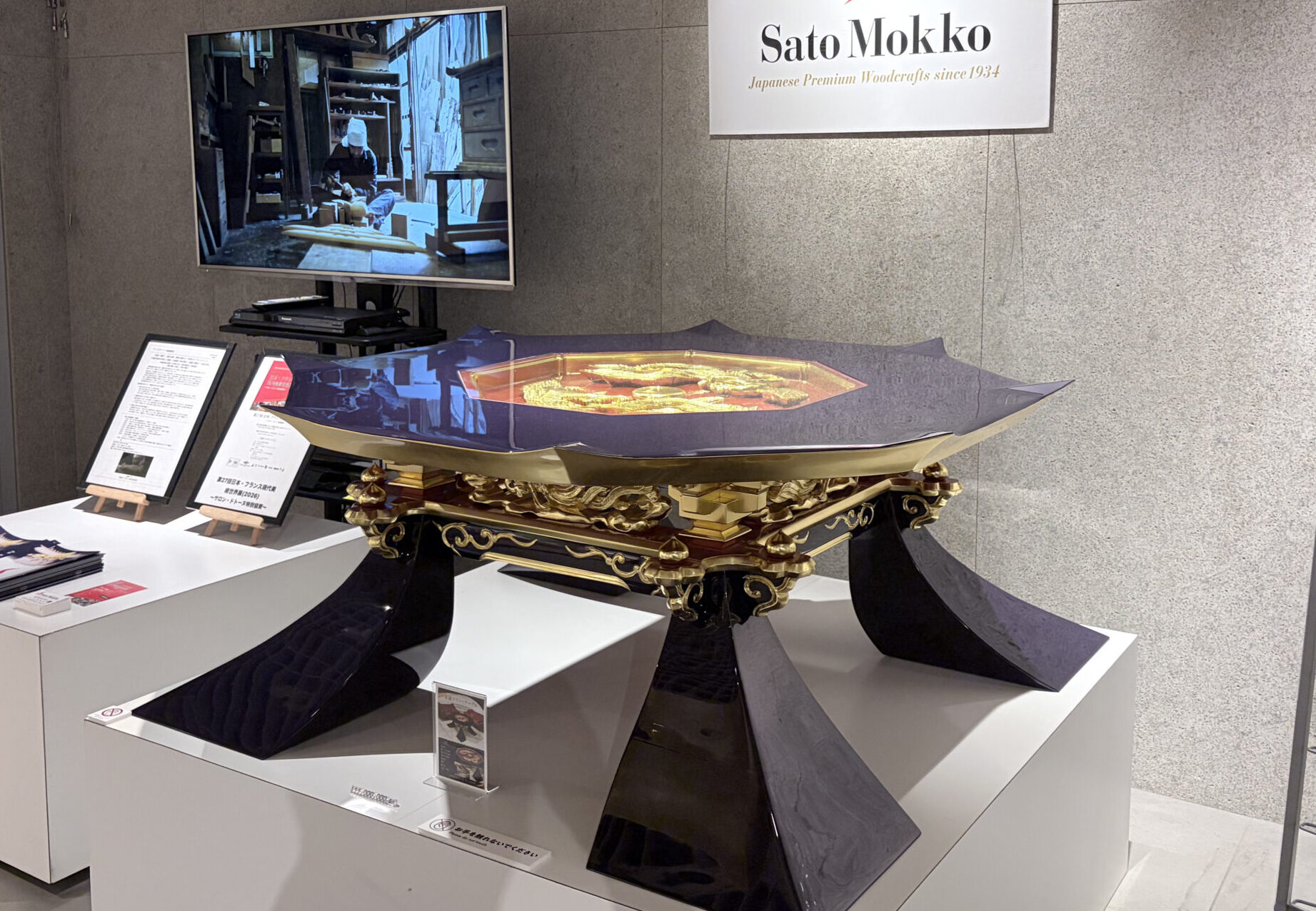
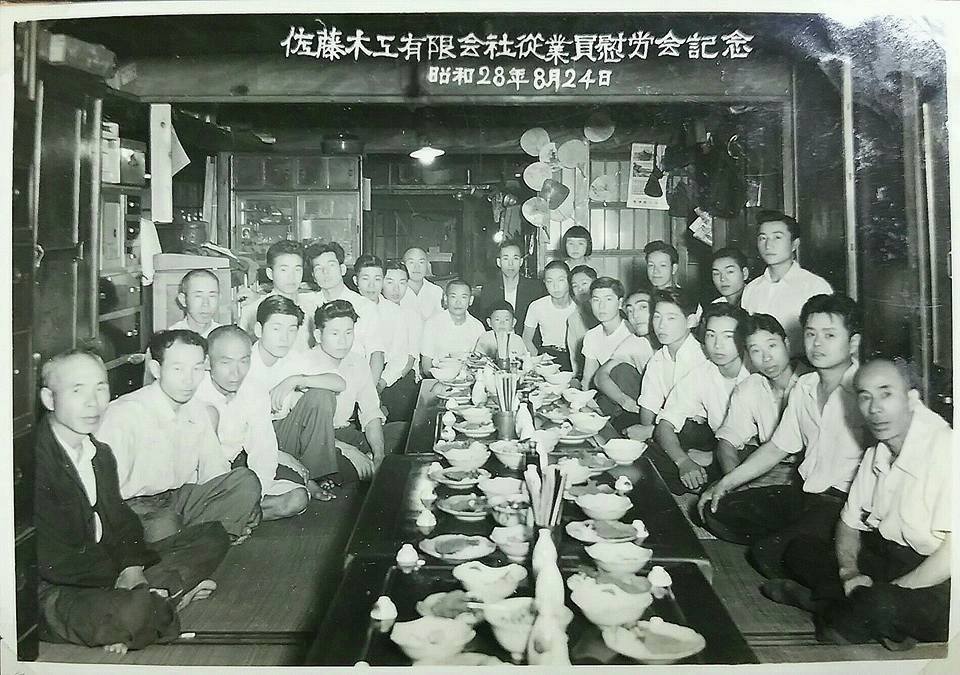
Sato Mokko is the woodworking workshop my grandfather founded in 1934. Since his time, we have made fine furniture, undertaken woodworking for shrines and temples, and created custom pieces. Today, I draw on those traditional skills to make furniture and creative works suited to contemporary life.
The Work and Skills I Inherited from My Grandfather
My grandfather was originally a carpenter. He expanded into furniture and woodworking for shrines and temples, and that was the beginning of Sato Mokko. Understanding the character of the wood and shaping it into what is needed has been part of our work since his generation.
Furniture making and shrine and temple woodwork both involve wood, but their methods of construction and ways of thinking differ. Sato Mokko has long worked in both fields. My work today rests on the skills accumulated through that experience.
What we make has changed with the times. What has remained is the process of studying the wood, thinking for ourselves and shaping it by hand. The work that began with my grandfather continues in the furniture and pieces I make today.
Bringing Inherited Skills into Life Today
The way we live has changed considerably. Storage once played a major role in furniture, but mass-produced pieces now often provide all the practical functions people need. I believe that, rather than simply continuing to make the same furniture as before, we need to give it forms that people want to bring into their homes today.
We can still make traditional furniture when requested. But if these inherited skills are to continue into the future, we need to consider how they can be used and presented in ways that matter in contemporary life. That thinking has gradually led me to explore a wider range of forms and expression.
It is because I have these traditional skills that I can try new forms. At Sato Mokko, I keep the skills I have inherited in use by applying them to the way we live today.
Finding the Right Way to Show the Wood
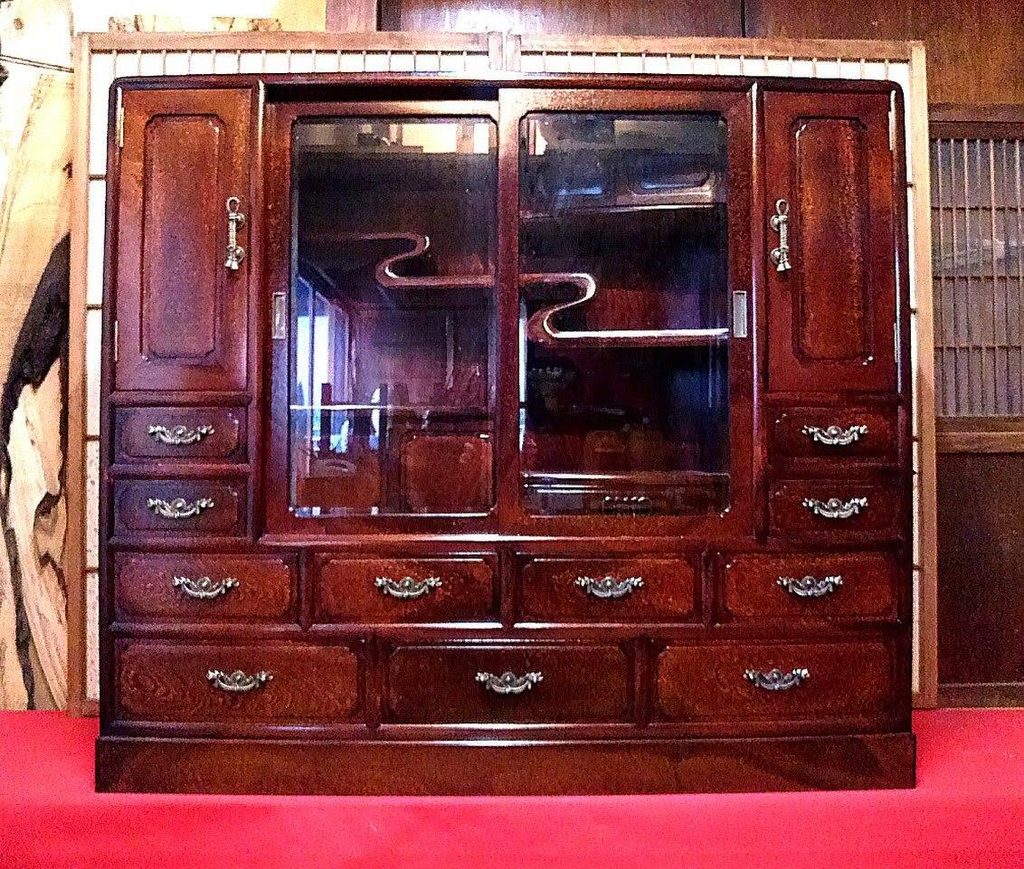
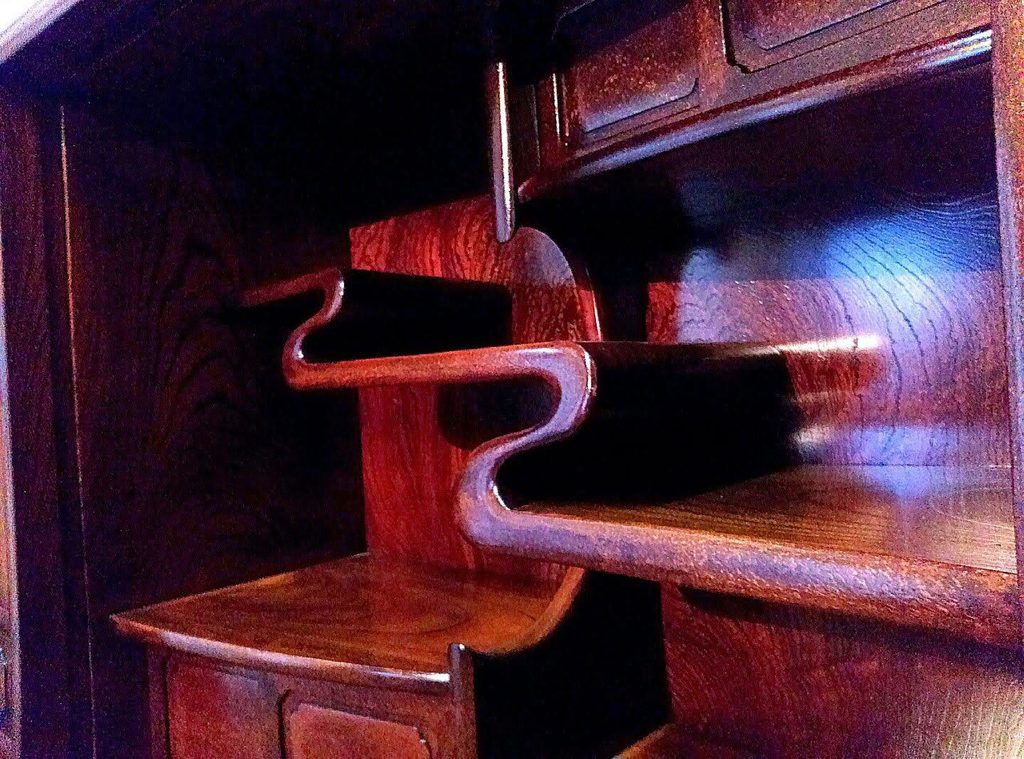
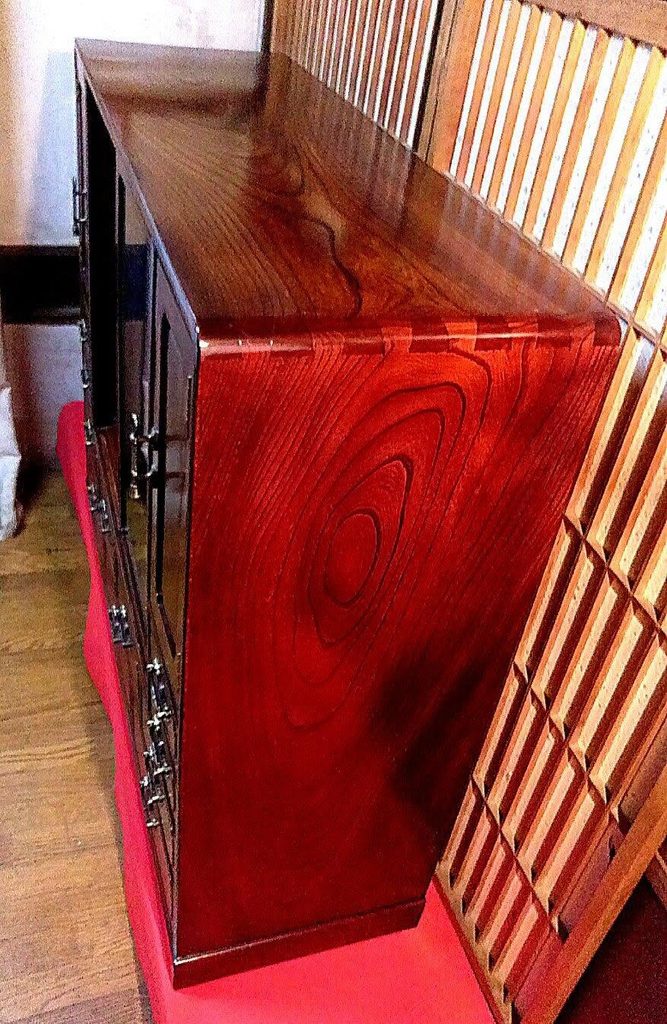
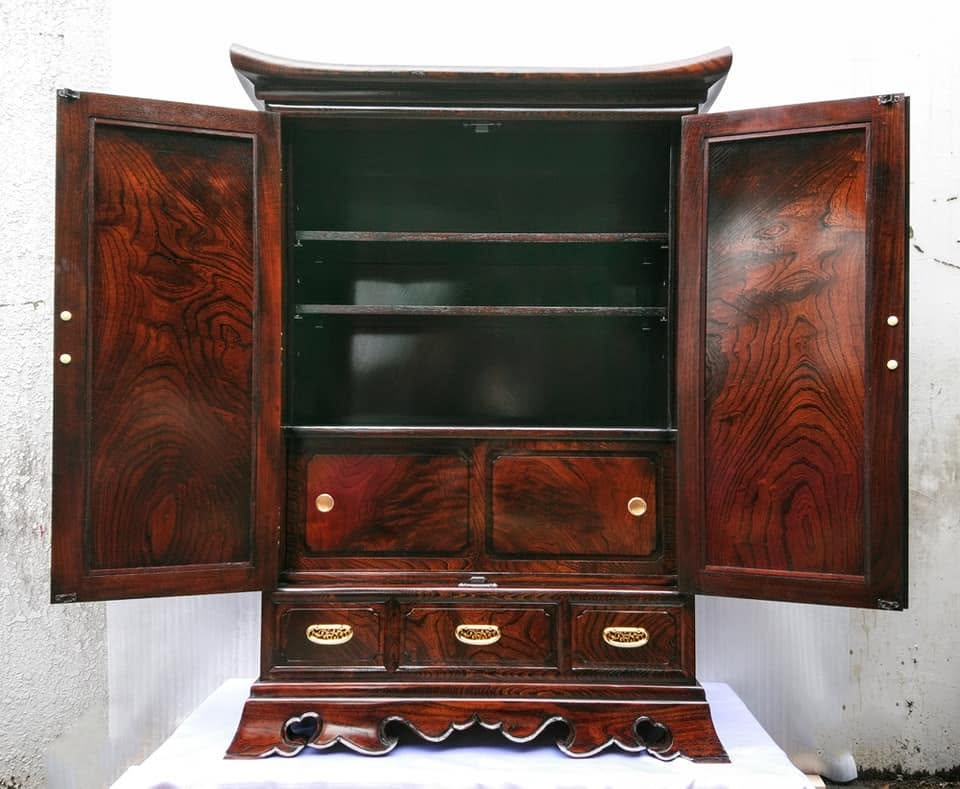
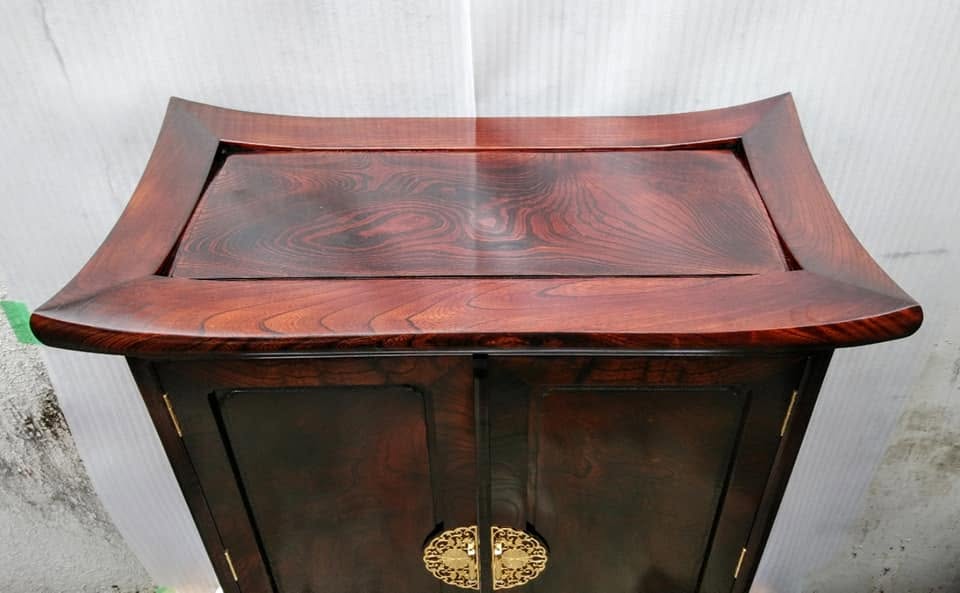
When the grain is part of a piece’s appearance, I pay close attention to how I use the wood’s individual character. Every board of natural timber has its own grain and colour. Even boards of the same species do not look alike.
Which board should go where? Which direction should it face? How should the grain continue across adjoining surfaces? Drawing on techniques such as sashimono, traditional furniture joinery, I plan the arrangement so that the wood looks its best in the finished piece.
In other works, I finish the surface with urushi lacquer or gold leaf, covering the grain. What matters is choosing the treatment that suits the piece. When I leave the grain visible, I hope people first notice its flow and the way the whole composition comes together.
Listening to the Customer and Bringing My Own Ideas
For a custom commission, I begin by listening. What will the piece be used for? Where will it stand? How large does it need to be? Once I understand those requirements, I offer suggestions based on the wood, the structure and my experience.
Customers sometimes tell me that the result is more than they had imagined. When someone chooses Sato Mokko, I want to go beyond reproducing their request. I want to contribute my own thinking and make something that exceeds their expectations.
I have long believed that “a craftsperson is a creator.” Making what one is told to make is only part of the work. Thinking independently and bringing a form into being are also a craftsperson’s responsibility. That belief continues to guide the pieces I make today.
What We Do at Sato Mokko Today
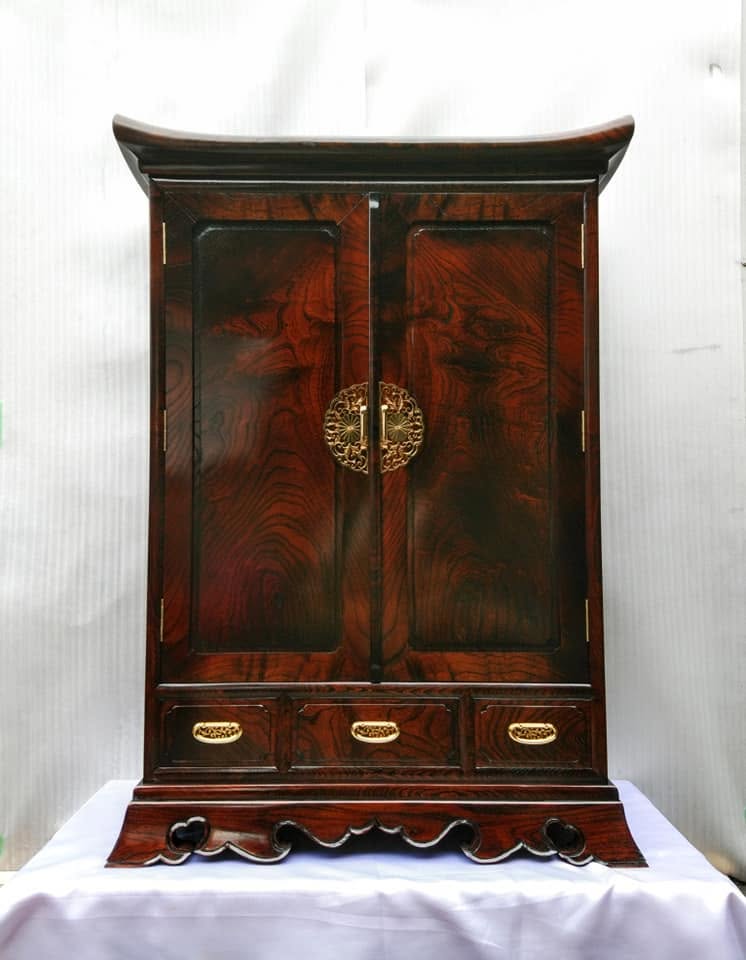
My work now includes one-of-a-kind furniture, custom woodworking, projects for shrines and temples, and the restoration and repair of older wooden objects. People also come to us with unusual dimensions or specifications, or with work for which they have struggled to find someone to consult.
Furniture making has its own methods, as does shrine and temple woodwork. Restoration also calls for experience in studying older objects and understanding their original form. Years spent in each of these fields inform the individual pieces I make today.
More recently, I have used those skills to create pieces that can be enjoyed both as functional furniture and as objects to look at and appreciate. I am also exploring creative work that extends beyond the usual boundaries of furniture.
What I Want to Explore Next
Building on the skills and experience I have gained through furniture making, shrine and temple work, and restoration, I want to share my own creations as art, both in Japan and internationally.
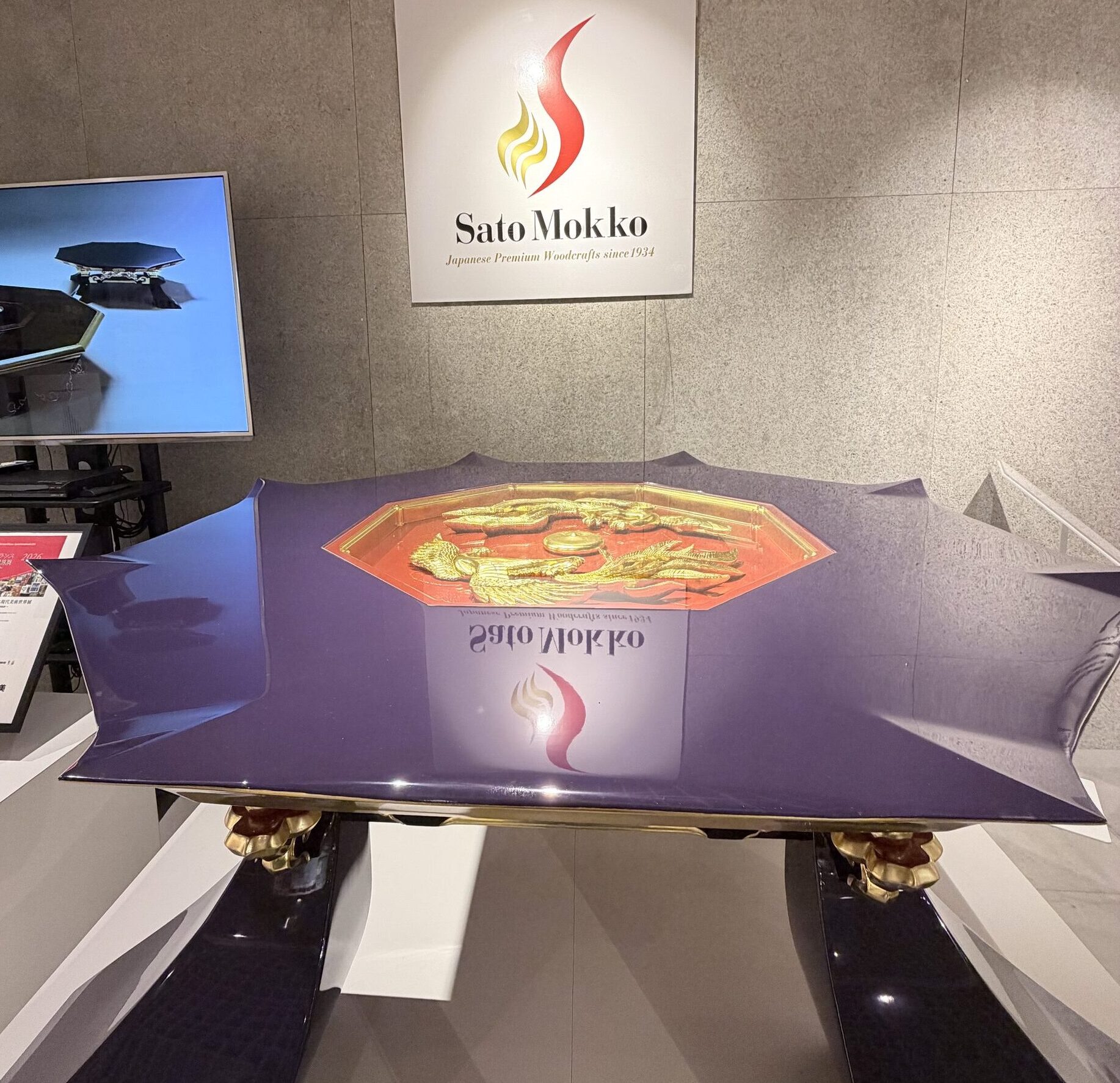
I call this work “Sousaku Wa-kagu,” or “Creative Japanese Art Furniture.” I use traditional woodworking skills while following the forms I find beautiful, without limiting myself to furniture’s practical functions.
My aim is for someone to think, “I want this particular piece,” or “I want it because it is a work by Sato Mokko,” as well as simply needing a table or another item of furniture. I hope the skills I have inherited will find their next place through the pieces I create.
Talk to Us
If you would like to learn more about a piece or discuss a commission, please use the contact form below. You are welcome to get in touch before you have settled on a specific design. Tell us what you can in the “Your Enquiry” field.